The Ultimate Serengeti Migration Guide
Introduction: Experience the Greatest Wildlife Show on Earth
The Serengeti Migration, also known as the Great Wildebeest Migration, is one of the most extraordinary natural events on the planet. Each year, over 1.5 million wildebeest, accompanied by hundreds of thousands of zebras and gazelles, move in a continuous cycle across the Serengeti ecosystem in search of fresh grazing and water.
This natural spectacle is not just a migration—it is a dramatic story of survival, instinct, and raw wilderness. From river crossings filled with crocodiles to calving season bursting with new life, the Serengeti offers an unforgettable safari experience for travelers from around the world.
This comprehensive guide provides everything you need to know: when to go, where to see the migration, what to expect, travel tips, and how to plan the perfect safari.
What is the Serengeti Migration?
The Serengeti Migration is a year-round movement of animals across the Serengeti ecosystem, spanning northern Tanzania and southern Kenya. It is driven by seasonal rainfall patterns that determine where fresh grass and water are available.
Unlike a fixed event, the migration is dynamic and constantly moving. Timing varies slightly each year depending on rainfall, making each safari unique.
Key Highlights of the Migration: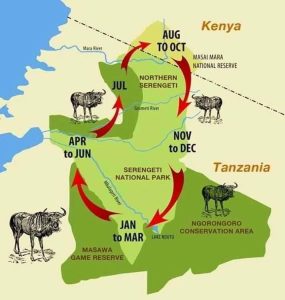
- Over 1.5 million wildebeest
- Around 300,000 zebras
- Thousands of gazelles
- Predators including lions, cheetahs, leopards, and hyenas
- Dramatic river crossings and predator-prey interactions
Annual Migration Cycle (Month-by-Month Guide)
Understanding the migration calendar is essential for planning your safari.
January – March (Calving Season – Southern Serengeti)
Location: Ndutu Plains and southern Serengeti
Highlights:
Birth of over 500,000 wildebeest calves
High predator activity (lions, cheetahs, hyenas)
Excellent photography opportunities
This is the best time to witness new life and intense predator action.
April – May (Green Season Movement – Central Serengeti)
Location: Central Serengeti
Highlights:
Herds begin moving northward
Lush green landscapes
Fewer tourists, more peaceful experience
This period offers beautiful scenery and quieter safaris.
June – July (Grumeti River Crossings – Western Corridor)
Location: Western Serengeti
Highlights:
First major river crossings
Crocodile encounters
Dramatic wildlife scenes
This is the beginning of the most iconic migration moments.
August – October (Mara River Crossings – Northern Serengeti)
Location: Northern Serengeti
Highlights:
Famous Mara River crossings
Large herds crossing dangerous waters
Exceptional wildlife viewing
This is the peak migration season and the most sought-after experience.
November – December (Return to Southern Serengeti)
Location: Central and Southern Serengeti
Highlights:
Herds move back south following rains
Scenic landscapes and fewer crowds
The cycle prepares to begin again.
Best Time to Visit Serengeti for Migration
The best time depends on what you want to see:
Calving & predators: January – March
Fewer crowds & green scenery: April – May
River crossings: June – October
Budget-friendly travel: November – December
Where to Stay in Serengeti
Accommodation plays a key role in your safari experience. Options range from luxury lodges to budget camps.
Types of Accommodation:
Luxury lodges: Premium comfort, excellent service
Tented camps: Authentic safari experience
Mobile camps: Follow the migration
Budget camps: Affordable and simple
Key Areas to Stay:
Southern Serengeti (Ndutu): Calving season
Central Serengeti: Year-round wildlife
Western Corridor: Early crossings
Northern Serengeti: Mara River crossings
How to Get There
By Air:
Fly into Kilimanjaro International Airport (JRO)
Domestic flights to Serengeti airstrips
By Road:
Drive from Arusha (6–8 hours)
Combine with other parks like Ngorongoro and Tarangire
What to Expect on a Safari
Daily Safari Routine:
Early morning game drives
Afternoon wildlife viewing
Evening relaxation at camp
Wildlife Encounters:
Big Five (lion, elephant, buffalo, leopard, rhino)
Migration herds
Birdlife and smaller mammals
What to Pack for Serengeti Safari
Essential Items:
- Lightweight clothing (neutral colors)
- Comfortable walking shoes
- Hat and sunglasses
- Sunscreen
- Camera with zoom lens
- Binoculars
Optional:
- Power bank
- Light jacket for cool mornings
- Travel insurance documents
Photography Tips for the Migration
Use a zoom lens (200mm+ recommended)
Shoot during golden hours (sunrise & sunset)
Be patient during river crossings
Capture movement and dust for dramatic shots
Safari Tips for First-Time Visitors
Book early during peak season
Choose experienced guides
Be flexible—migration movement is unpredictable
Respect wildlife and follow park rules
Combining Serengeti with Other Destinations
Enhance your trip by combining Serengeti with:
- Ngorongoro Crater
- Tarangire National Park
- Lake Manyara
- Zanzibar Beach Holiday
Why Choose a Guided Safari
- A professional safari operator ensures:
- Expert tracking of migration
- Comfortable accommodation
- Seamless logistics
- Safety and local knowledge
Frequently Asked Questions (FAQs)
Is the migration guaranteed?
No, it depends on rainfall patterns, but guides track movements closely.
How many days do I need?
Recommended: 5–7 days for a complete experience.
Is Serengeti safe?
Yes, with guided safaris and proper precautions.
Sample 7-Day Serengeti Migration Itinerary
Day 1: Arrival in Arusha
Day 2: Transfer to Serengeti
Day 3–5: Migration tracking & game drives
Day 6: Optional Ngorongoro visit
Day 7: Return & departure
Responsible Travel & Conservation
- Support conservation by:
- Choosing eco-friendly lodges
- Respecting wildlife
- Supporting local communities
Ready to witness the Serengeti Migration?
Let our expert team help you plan a personalized safari experience tailored to your travel style, budget, and timing. Whether you want luxury comfort, budget adventure, or a photography-focused safari, we ensure an unforgettable journey.
Contact us today to start planning your Serengeti Migration safari and experience Africa’s greatest wildlife spectacle.
Conclusion
The Serengeti Migration is more than a safari—it is an once-in-a-lifetime experience that connects you with nature in its purest form. From the thunder of hooves across the plains to the tension of river crossings, every moment is unforgettable.
Plan your journey today and become part of one of the world’s greatest natural wonders.