Route Overview
6 Days Kilimanjaro Climbing via Marangu Route | Hut-to-Hut Kilimanjaro Adventure Classic Trail
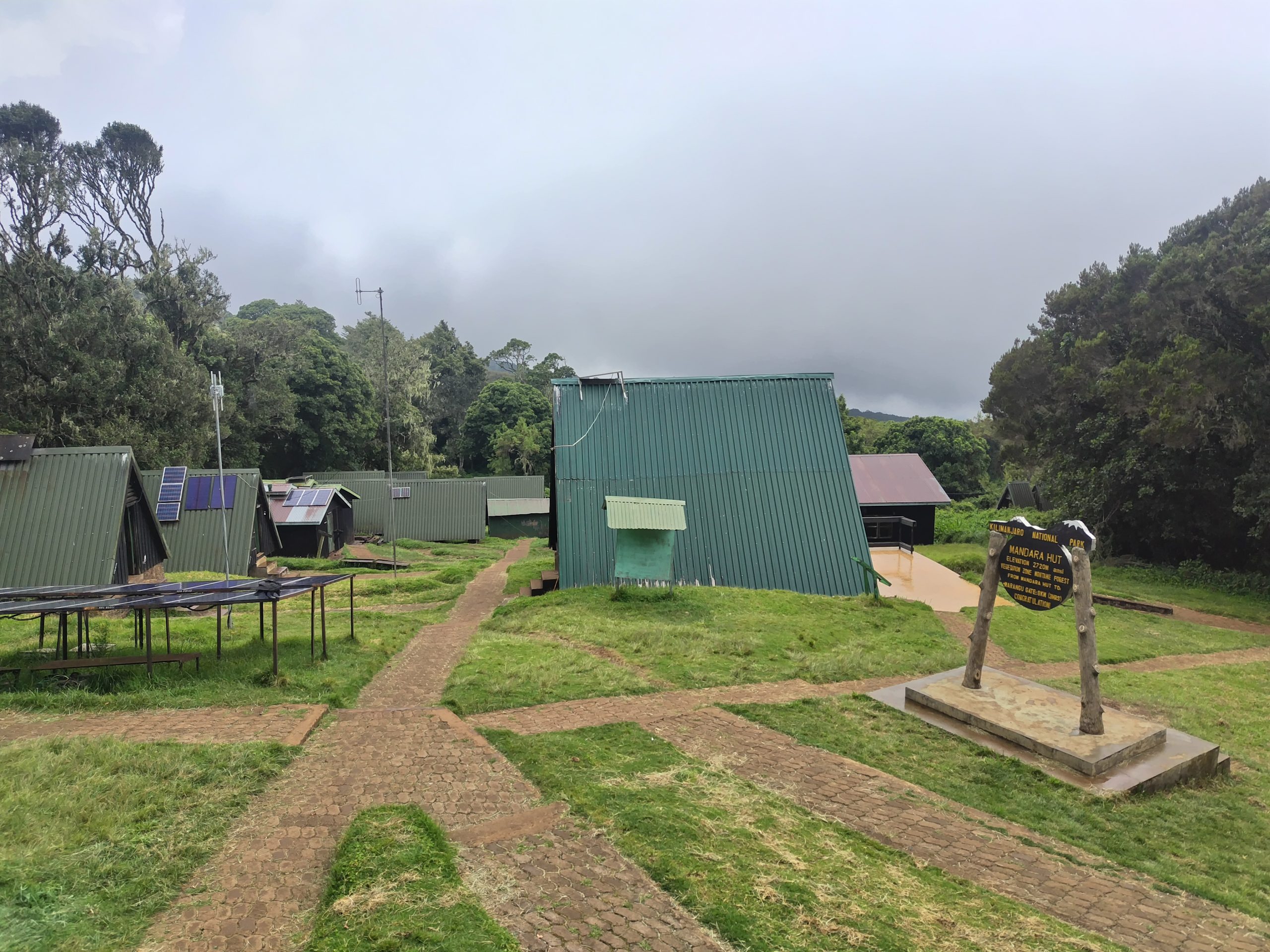
Marangu route which is also known as the coca cola route is the least expensive route to the summit. This is also the only route with the comforts of sleeping huts at every camp site with solar lights and comfortable beds.
The huts are communal, and the bunks have a sponge mattress and pillow.
There are 60 beds at both Mandara and Kibo Huts and 120 beds at Horombo Hut. Bathrooms and running water are available at the two lower huts. Mens’ and ladies’ latrines are available at the last camp but are very basic.
All climbing groups, often from several countries around the world, share meals in dining huts providing a jovial and energetic atmosphere.
This route is usually done in 5 days (shortest route to the summit) but can be done in 6 days for better acclimatization. The extra day can be spent resting at Horombo or climbing the small peak of Mawenzi.
Route Itinerary
Climbing Mount Kilimanjaro is one of the most iconic adventure experiences in the world. Standing at 5,895 meters (19,341 feet) above sea level, Kilimanjaro is the highest mountain in Africa and the tallest free-standing mountain on Earth.
Every year thousands of climbers travel to Tanzania to attempt reaching the legendary summit known as Uhuru Peak, the “Roof of Africa.”
Among all routes on the mountain, the Marangu Route is one of the most popular because it offers comfortable hut accommodation instead of camping.
The 6 Days Marangu Route itinerary includes an extra acclimatization day, increasing the chances of summit success compared to the shorter 5-day trek.
The journey begins at Marangu Gate, located inside Kilimanjaro National Park, and takes climbers through multiple ecological zones including lush rainforest, moorland, alpine desert, and the arctic summit zone.
This detailed guide explains everything you need to know about climbing Kilimanjaro via the 6-day Marangu route, including the itinerary, difficulty level, packing list, success rate, cost, safety tips, and expert advice for reaching the summit.
Why Choose the 6 Days Marangu Route?
The Marangu route is commonly referred to as the “Coca-Cola Route.” The nickname originated years ago when climbers could buy soft drinks at the huts along the trail.
Today it remains one of the most established and well-maintained routes on the mountain.
Key Advantages of the Marangu Route
✔ Only Kilimanjaro route with sleeping huts
✔ Gradual and direct trekking trail
✔ Good for first-time high-altitude trekkers
✔ Extra acclimatization day improves summit success
✔ Less technical compared to other routes
Unlike routes such as the Machame Route or Lemosho Route, the Marangu route follows the same path for both ascent and descent, making navigation easier.
However, climbers should still prepare physically and mentally for the challenge of high altitude.
Marangu Route Quick Overview
Route Name: Marangu Route
Duration: 6 Days
Distance: Approximately 72 km round trip
Starting Point: Marangu Gate (1,870 m)
Highest Point: Uhuru Peak (5,895 m)
Difficulty Level: Moderate
Accommodation: Mountain huts
Ecological Zones on the Marangu Route
Climbing Kilimanjaro is unique because the mountain contains five different climate zones.
During the trek you will pass through several environments in just a few days.
1 Rainforest Zone
The trek begins in a dense tropical rainforest filled with tall trees, vines, moss, and wildlife.
Common animals include:
- Blue monkeys
- Black and white colobus monkeys
- Tropical birds
This zone receives heavy rainfall and is rich in biodiversity.
2 Moorland Zone
Above the rainforest, the vegetation becomes shorter and more open.
This zone features unique plant species such as:
- Giant lobelia
- Giant groundsels
- Alpine shrubs
The views of Mawenzi Peak become spectacular from this elevation.
3 Alpine Desert Zone
Higher up the mountain the landscape becomes dry, rocky, and barren.
Temperatures fluctuate dramatically between day and night.
This region between Kibo and Mawenzi peaks is known as the Saddle.
4 Arctic Summit Zone
Near the summit, oxygen levels drop significantly and temperatures can fall below -20°C.
Snow, glaciers, and volcanic rock dominate this final environment.
Detailed 6 Days Marangu Route Itinerary
Day 1: Marangu Gate to Mandara Hut
Your adventure begins with a drive from Moshi or Arusha to Marangu Gate.
At the gate, climbers complete park registration before starting the trek through the rainforest.
After several hours of hiking you reach Mandara Hut, located at 2,720 meters.
Many climbers take a short optional walk to Maundi Crater, which offers beautiful views of Kenya on a clear day.
Hiking distance: 8 km
Hiking time: 4–5 hours
Day 2: Mandara Hut to Horombo Hut
Leaving the rainforest behind, the trail gradually climbs into the moorland zone.
The landscape opens dramatically with expansive views of Kibo and Mawenzi peaks.
After about six hours of trekking you reach Horombo Hut, the largest camp on the Marangu route.
Distance: 12 km
Hiking time: 5–6 hours
Day 3: Acclimatization Day at Horombo Hut
This day is crucial for adjusting to the altitude.
Climbers hike to Zebra Rocks (4,020 m) before returning to Horombo Hut.
The strategy of “climb high, sleep low” helps prevent Acute Mountain Sickness.
You will also enjoy impressive views of Mawenzi Peak.
Day 4: Horombo Hut to Kibo Hut
The trail continues across the alpine desert landscape known as the Saddle.
After several hours of hiking you arrive at Kibo Hut, located at 4,700 meters.
You will rest early and prepare for the midnight summit attempt.
Distance: 10 km
Hiking time: 5–6 hours
Day 5: Summit Day – Uhuru Peak
Around midnight, climbers begin the most challenging part of the trek.
The steep ascent leads to Gilman’s Point on the crater rim before continuing toward the summit.
Reaching Uhuru Peak at sunrise is the highlight of the expedition.
After celebrating at the summit, climbers descend back to Kibo Hut and continue down to Horombo Hut.
Total hiking time: 10–14 hours
Day 6: Horombo Hut to Marangu Gate
The final day involves descending through the rainforest to Marangu Gate.
Climbers receive their official Kilimanjaro summit certificates before returning to Moshi or Arusha.
Best Time to Climb Kilimanjaro
The best seasons to climb Kilimanjaro are:
January – March
June – October
These months offer the best weather conditions and clear summit views.
Avoid heavy rains during April, May, and November.
Kilimanjaro Marangu Route Difficulty
Although the Marangu route is considered one of the easier Kilimanjaro routes, altitude remains a serious challenge.
Success depends on:
- Physical preparation
- Proper acclimatization
- Experienced guides
- Slow hiking pace (“Pole Pole”)
- Training for Kilimanjaro
Climbers should begin training 8–12 weeks before the expedition.
Recommended activities include:
- Hiking with elevation gain
- Cardio training
- Strength exercises
- Long distance walking
Kilimanjaro Packing List
Essential equipment includes:
- Waterproof hiking boots
- Thermal clothing
- Down jacket
- Headlamp
- Warm gloves
- Trekking poles
- Sleeping bag rated for -10°C
- Rain jacket
- Sunglasses and sunscreen
Safety on Kilimanjaro
All climbs must follow regulations set by the Kilimanjaro National Park Authority.
Professional teams provide:
- Certified mountain guides
- Porters
- Mountain cook
Safety monitoring
Guides perform daily health checks using pulse oximeters to monitor oxygen levels.
Marangu Route Success Rate
Success rates vary depending on the itinerary.
5 Day Marangu: ~50%
6 Day Marangu: ~70–75%
The extra acclimatization day dramatically improves summit chances.
Cost of the 6 Days Marangu Route
Typical Kilimanjaro climbing costs range from $1,500 to $2,500 per person depending on group size and services.
Prices normally include:
✔ National park fees
✔ Hut accommodation
✔ Professional guides
✔ Porters
✔ Meals on the mountain
✔ Drinking water
✔ Safety equipment
Responsible Kilimanjaro Tourism
Ethical trekking companies ensure fair treatment of porters and follow sustainable tourism practices.
This includes:
- Fair wages
- Proper porter equipment
- Environmental conservation
- Waste management
Frequently Asked Questions (FAQ)
How difficult is the Marangu Route?
The Marangu route is considered moderately difficult. While the trail is not technical, altitude and long hiking days make the climb physically demanding.
What is the success rate of the Marangu route?
The 6-day Marangu itinerary has a success rate of around 70–75 percent.
Do you sleep in tents on the Marangu route?
No. The Marangu route is the only Kilimanjaro route that uses mountain huts instead of tents.
How cold does it get on Kilimanjaro?
Summit temperatures can drop to -20°C or colder, especially during the night ascent.
Do I need previous climbing experience?
No technical climbing skills are required. However, good physical fitness and preparation are important.
How long does it take to climb Kilimanjaro?
Most routes take 5–9 days, with 6–8 days recommended for better acclimatization.
Is altitude sickness common?
Yes, many climbers experience mild symptoms such as headache or fatigue. Proper acclimatization reduces the risk.
What is the best route for beginners?
Many beginners choose the Marangu route because of its gradual ascent and hut accommodation.
Book Your Kilimanjaro Adventure
Climbing Mount Kilimanjaro via the Marangu route is a life-changing adventure that takes you from lush rainforest to the snowy summit of Uhuru Peak.
With proper preparation, experienced guides, and a well-planned itinerary, reaching the Roof of Africa is an achievable goal for many travelers.